Why Is Urinalysis during the DOT Physical exams Required?
The Federal Motor Carrier Safety Administration (FMCSA) requires a urine dipstick test to screen for medical conditions that could affect a driver's ability to safely operate a commercial motor vehicle. The test is quick, non-invasive, and performed during the DOT exam.
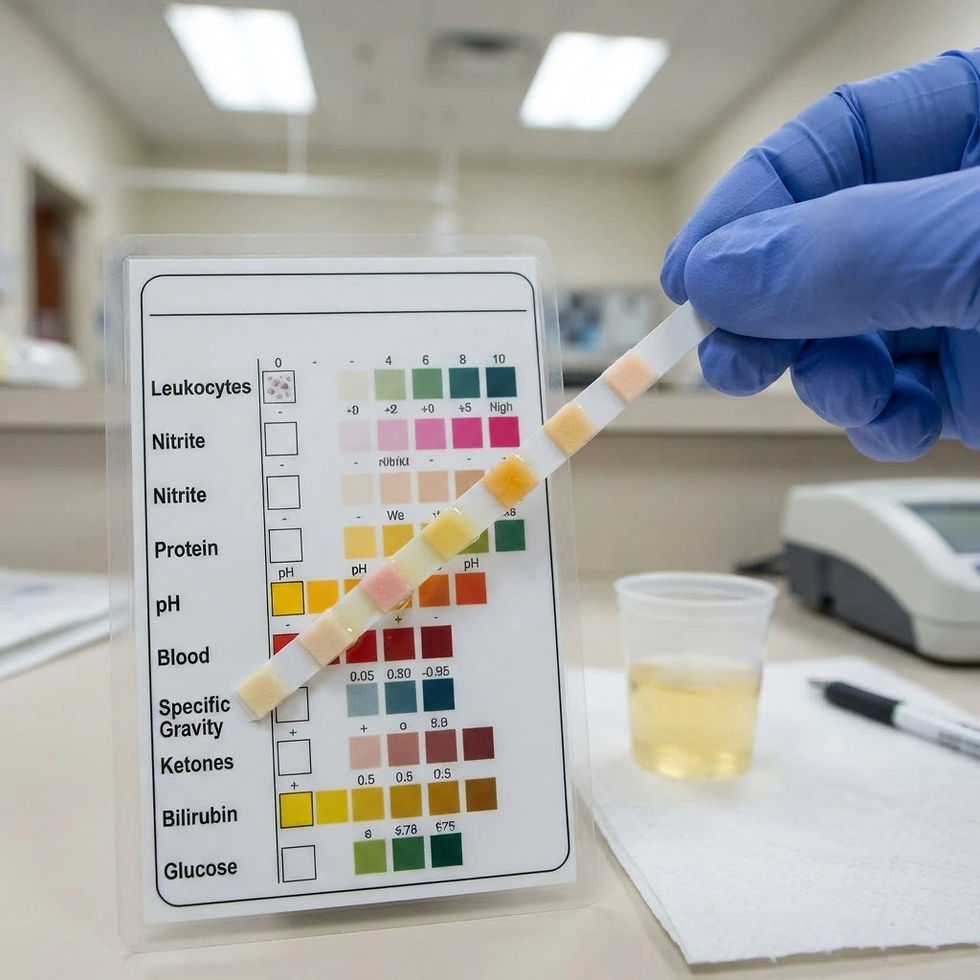
What Does the Examiner Look For?
1. Glucose (Sugar)
Normal: Negative
Finding glucose in the urine may suggest:
Diabetes mellitus
Poorly controlled blood sugar
Undiagnosed diabetes
2. Protein
Normal: Negative or trace
Protein in the urine may indicate:
Kidney disease
High blood pressure affecting the kidneys
Dehydration
Temporary illness or strenuous exercise
A single positive protein result often leads to a recommendation to follow up with your primary care provider rather than immediate disqualification.
3. Blood (Hematuria)
Normal: Negative
Blood in the urine may be caused by:
Kidney stones
Urinary tract infection
Enlarged prostate
Vigorous exercise
Other kidney or bladder conditions
A positive result does not automatically fail the DOT exam. The examiner may simply recommend further evaluation.
4. Specific Gravity
Typical range: 1.005 to 1.030
This measures how concentrated your urine is.
Low specific gravity may indicate overhydration.
High specific gravity may indicate dehydration.
Being slightly dehydrated generally will not fail you, but the examiner may ask questions if results are significantly abnormal.
An ideal DOT urinalysis report would look something like:Glucose: NegativeProtein: NegativeBlood: NegativeSpecific Gravity: 1.010-1.030
